

Dubai Police deploy drones and satellites to track marine pollution
New systems help specialist teams assess incidents before sending boats to sea
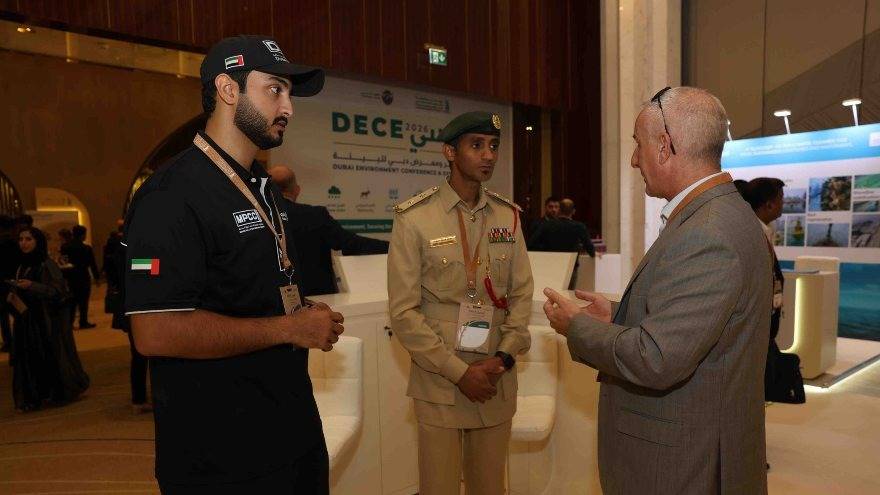
DUBAI – Police in Dubai are taking marine pollution response into the skies, using drones and satellite-connected technology to detect, assess and track environmental incidents at sea.
The force showcased several specialised systems designed to help its Marine Pollution Control Centre respond more quickly to oil spills and other pollution threats. The technologies were presented at the Dubai Environment Conference and Exhibition 2026 (DECE), held at the Grand Hyatt Hotel Dubai from 7 to 8 September.
The systems are designed to give specialist teams a clearer picture of incidents before committing boats and other equipment to the affected areas. By combining aerial technology, sampling capabilities and satellite tracking, Dubai Police can assess pollution, support operational decisions and determine the resources required for a response.
Aerial sampling
One of the key technologies on display was a sampling drone developed by the Marine Pollution Control Centre in cooperation with the Drone Centre.
The aircraft can travel to the reported location of a potential pollution incident and collect samples to establish whether contamination is present. This allows teams to conduct an initial assessment without immediately deploying a boat.
Information gathered by the drone can then help specialists determine whether a marine response is necessary and what equipment or resources may be required, potentially reducing the time taken to assess incidents and deploy the appropriate response.
Airborne response
Dubai Police also showcased a larger drone capable of spraying dispersant on oil spills. The aircraft can carry approximately 40 litres of dispersant and is designed to reach areas where access by boat may be difficult.
The aerial system gives response teams another option for reaching affected locations and treating oil spills, particularly where marine access presents operational challenges. Its use can also support a faster response by allowing dispersant to be delivered directly to targeted areas.
Satellite tracking
Another system presented at DECE was a specialised marine buoy designed to track oil spills. Connected to satellites, the buoy continuously transmits its location while moving with the oil spill.
The technology enables specialist teams to monitor the direction and movement of a spill over time, providing updated information as marine and environmental conditions change. This can help teams locate the affected area and follow its progress during an incident.
Dubai Police’s participation in DECE also provided a platform for exchanging expertise with organisations working in environmental protection. The projects form part of the force’s efforts to strengthen operational readiness and efficiency in responding to marine pollution while supporting the protection of Dubai’s marine environment and natural resources.